
I came out as gay in eighth grade and throughout high school maintained my lesbian identity, probably never thinking otherwise because high school boys are immature and weird. Since arriving in college, it seems I was correct. It truly was just high school boys being immature and weird.
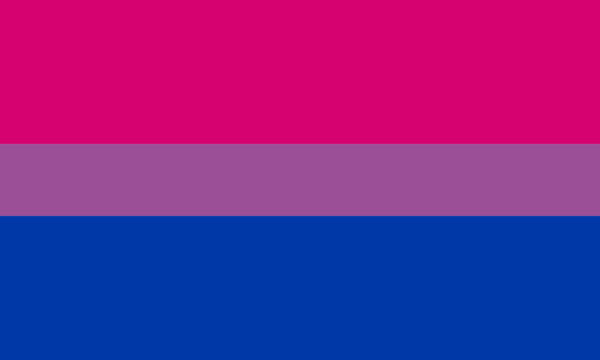
As I entered my first year of college about six months ago, I began identifying as bisexual. I still wasn’t completely certain of it, but then I got a boyfriend, so now I’m pretty sure.
I like being perceived as queer. I realize that this statement is dripping with privilege, and I do have the advantage of living in an accepting environment with accepting people all my life, sheltered from the hate I know is so often directed at the LGBTQ+ community.
Queerness has always made sense to me. I find heterosexuality boring, and I’ve always felt more comforted and connected to the freedom of queerness.
To me, being queer means breaking the binary, being free to express myself in colorful, lively ways. It’s more than just same-sex attraction (although for me that is one of the criteria)–it’s a community.
I am almost embarrassed, wondering if others, especially people who knew I identified as gay in the past, now think I was faking or lying simply because I am with a man and can be perceived as straight.
Why do I think this? I believe it is a systemic issue that stems from a heteronormative society that invalidates bisexuality simply because it does not fit well into a binary.
Night: day, black: white, man: woman. Even woman: woman or man: man is an easier pill to swallow than to accept fluidity.
If the general public cannot understand who you are from one glimpse, one look at who your partner is or how you dress, you will be beaten down into its form-fitting labels. This is not just a problem in general society but LGBTQ spaces too.
A qualitative study of bisexual identity invalidation included a survey conducted at Southeastern University which involved 52 participants.
The survey showed that 85% of bi+ people (umbrella term used to describe people attracted to more than one gender or sex) had experienced identity invalidation, which “specifically refers to having one’s membership in a group denied by others.”
–There were five perceived reasons for this invalidation: others not understanding or accepting bisexuality, the gender of a bisexual person’s partner, others believing they were confused, others believing they were faking and others rejecting bisexuality for religious reasons.
This study also concluded that “bisexual people experience the worst mental health outcomes of any sexual orientation group.”
There is certainly deep-seated biphobia perpetuated by a society that has dipped its toes in the water enough to accept a gay woman because it can grasp a shallow labeling of it but cannot explore deeper into fluidity.
There is also the misogyny that goes hand-in-hand with biphobia, as it so often appears in our society. A bisexual man may be seen as gay, but a bisexual woman is most likely seen as straight. The common denominator is being with a man.
We’re back to our old friend misogyny and how it trivializes women to favor men. Being with a man is more important than an accurate depiction of identity.
The misunderstanding of bisexuality runs deep in our society, and when something cannot be neatly tied up, it is rejected, hence the issue of bisexual erasure. Fluidity has always been normal, and I, for one, am not changing just because I am with a man (hi, gorgeous) or not easily digestible for the general eye.
A letter to bisexuals: stay proud.
Tollaksen can be reached at [email protected].


