

This summer, I fulfilled a promise to both myself and my late grandmother and traveled to Reykjavík, Iceland to study the Icelandic language.
Having grown up around my amma (the Icelandic word for grandmother), a lifelong Icelander, and my father, who spent much of his childhood in a little fishing village called Njarðvík, the cadences of Icelandic were familiar to me. However, due to the rarity of Icelandic speakers, my actual language abilities left much to be desired.
After my amma’s passing, I had no one left to speak with in this obscure tongue, so I set off for a summer in her homeland.
During the first month of my stay, I lived in Reykjavík, the northernmost capital city in the world. I participated in an intensive summer school in the modern Icelandic language at the Árni Magnússon Institute for Icelandic Studies, a part of the University of Iceland, or Háskóli Íslands.
Each day, I took courses alongside students from many corners of the world — from Australia to Italy to Estonia. Although many were language students like myself, many were not, and our ages ranged from 18 to 80. By sharing unique experiences, cultures and languages, we bonded while working together to master the nuances of Icelandic.
The friendships that I made will not be forgotten and neither will my time spent sitting in the garden behind Alþingishúsið (the Icelandic parliament), strolling alongside Tjörnin (the famous pond in the center of Reykjavík known for its overconfident gulls) or exploring Dómkirkjan, where an uncle of mine once preached.
While studying at the university, I lived with relatives on the outskirts of Reykjavík. Some of my fondest memories came from sitting around their table, sharing stories and learning about Icelandic culture.
It was here that I was able to enjoy the Icelandic food that I rarely have access to, like pylsur (an Icelandic hot dog), white fish, kleinur (a sweet food made from fried cardamom dough) and hangikjöt (hung lamb).
Staying with them was a gift, not only because of their kindness and hospitality but also because of the proximity to nature. Though I enjoyed exploring Reykjavík my eye was always drawn to the sea, the hills or to Esja, the mountain across the bay.
While I love the cultural experiences that being in a city can bring and value them as necessary for our society and education, my heart is always drawn away from human settlements—to the places where birds sing and lone hikers wander with their dogs.
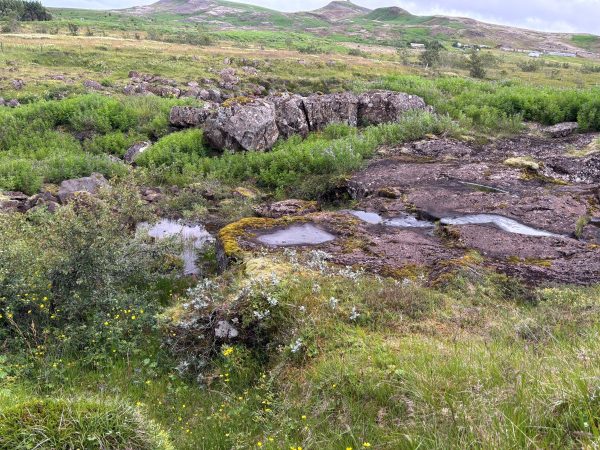
Because of the midnight sun, I was able to take long walks in the hills outside of Reykjavík each evening after taking the bus back to the house. Some of my most memorable experiences in Iceland involved walking alone through these little paths, alongside various species of cheerful birds and the variety of flora that Iceland’s hills boast.
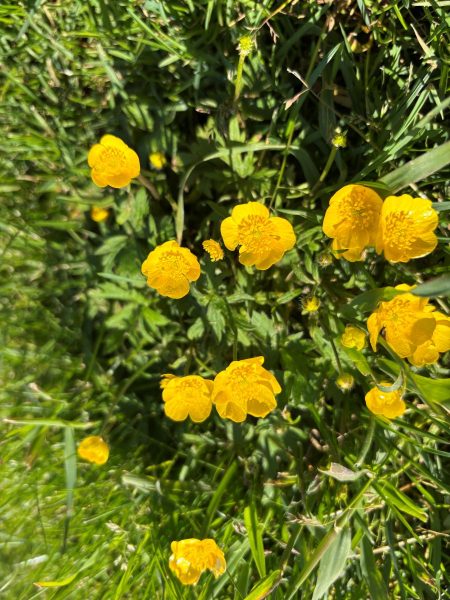
While the popular tourist attractions and dramatic landscapes of the coasts and mountains are unimaginably vast and almost mythic in their otherworldly beauty, I found that the true beauty of Iceland lay between the sites and larger settlements.
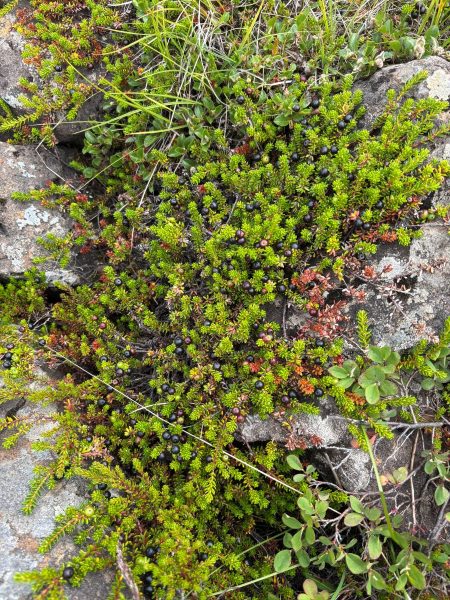
In the hills, fields and rocks, there is a bounty of small treasures like patches of crowberries (krækiber), rambling streams, old wayfinders, cheerful spóar (whimbrels) and hot springs, some of which I’ve heard are handy for boiling eggs.
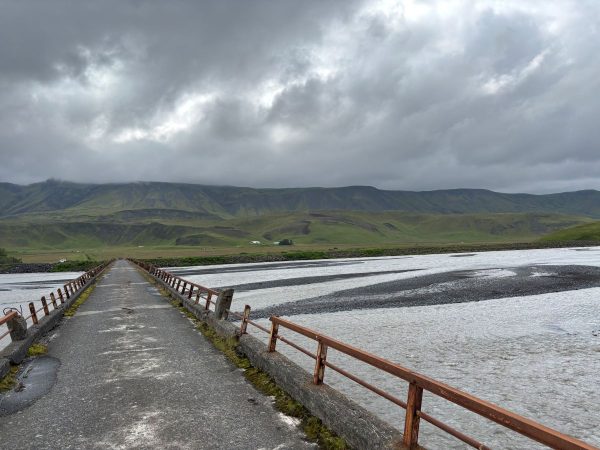
After the completion of my studies in Reykjavík, I went to stay in Hveragerði for a week with another cousin. I spent my days walking along shorelines, the white swans gracefully gliding across the salt water between the black rocks, driving inland across rivers to reach inaccessible glaciers and valleys, and strolling up in the hills with my cousin’s dog, Kolli.
There were too many poignant experiences to count. I visited the gravestones of ancestors and relatives. I walked in hills like the ones my father and amma walked in, eating crowberries just like they did in August when their bitterness gave way to a sharp sweetness.
I rode a gentle red horse named Jarl across a valley surrounded by towering hills. I made new friends and became closer to relatives I had only met a handful of times. I fell in love with Icelandic rural life and learned an unquantifiable amount from all of the people I spoke with.
But more than anything else, I loved the crowberries. When I ate them while walking atop the fells, I felt my amma wandering with me.
Crist can be reached at [email protected].


