On Thursday, April 16, UW-Eau Claire – Barron County released a new installment in its Thursdays at the U series, tackling the history and challenges facing perennial agriculture.
Thursdays at the U provides free education to students and community members through weekly lectures covering topics from AI and our humanity to raising Icelandic sheep.
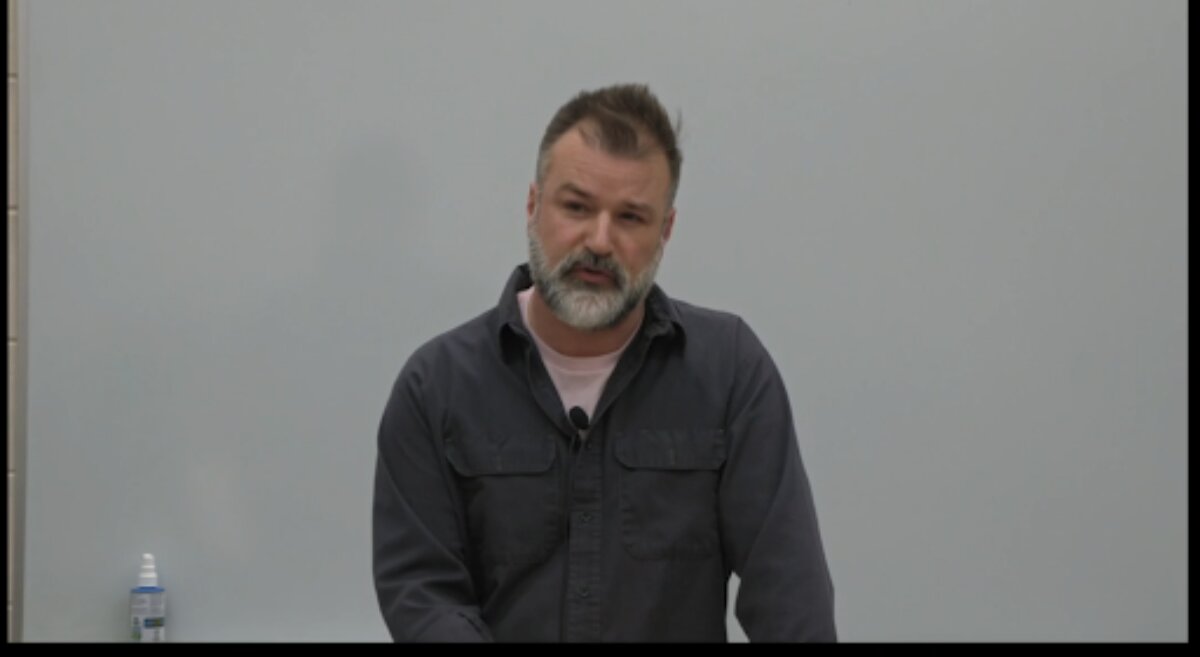
A Few Observations on Perennial Agriculture was led by Dr. Mark Sherman, a retired veteran and tenured professor at the University of Florida who earned his Ph.D in vegetable crops from Cornell University.
“After Cornell, I went to the vegetable crops department at the University of Florida,” Sherman said. “After I was there for a bit, broccoli was becoming a very popular vegetable, and Florida had no one growing broccoli. We had cabbage and potato growers, and I said, well, maybe you should try broccoli. It’s similar to cabbage.”
Sherman said he decided to help growers bring broccoli to Florida using his knowledge of soils and vegetation.
“The way I started was I put in plant trials of different varieties, but I adopted the standard practice for fertilizing them,” Sherman said. “I did a soil test, found out how much nitrogen, phosphorus and potassium I needed to add, looked for micronutrients — that kind of thing.”
Sherman said that studying the soil first instead of planting broccoli crops right away yielded much more positive results.
Next, Sherman highlighted the influential work of John Ernst Weaver, a botanist and ecologist who completed research in the grasslands of the United States.
“He was the author of the first textbook on plant ecology. The book covers 50 years of his work,” Sherman said. “He did part of his studies during the Dust Bowl years … He never intervened; he just observed what happened.”
Sherman also mentioned Wendell Berry, who is best known for his work as a novelist, but who Sherman said was also an outspoken environmental activist.
According to Sherman, Berry was friends with geneticist Wes Jackson, and they bonded over a “concern about the human ability to live on the land.”
Sherman highlighted Jackson’s book “An Inconvenient Apocalypse,” which discusses the realities of an impending climate crisis, and what can be done about it.
“It’s all about how we’ve got to change the way we live in order to survive,” Sherman said.
Sherman said issues currently facing perennial agriculture include soil subsidence, where soil sinks deeper into the ground. This can be caused by factors like the overextraction of groundwater and decomposing organic material.
Sherman then showed a photo of a pole in Florida several feet high, illustrating how far the soil has sunk over the years.
“When I was in Florida, I had statewide responsibilities for vegetable crops. I went all the way from Key West to Pensacola, which is 700 miles,” Sherman said. “The soil was at the top of that post when it was put in the ground, and that much of that peat soil is now gone.”
Sherman then discussed Anarchy Gardens, a 39-plot garden Sherman built in Shetek, Minn., after he and his wife sold their greenhouse.
“I began doing Anarchy Gardens a little bit differently,” Sherman said. “I tried to incorporate perennial, native plants, and I focused on nitrogen fixes because I wanted things that would feed my root systems.”
Sherman said that the Prairie Nursery in Wisconsin was an excellent way to get plants, and he called the owner an expert on restoring prairies.
Sherman ended the lecture with audience questions, recommending the Homegrown National Park website to non-farmers looking to start growing their own crops.
Garrison can be reached at [email protected].